Prototype · The Curve white paper reading experience · Copy from the AI White Paper draft · "In this section" summaries are editable suggestions · Try it at phone width

AI White PaperTotal time to read: 15 minutes

AI White Paper

An ethical investment approach to the biggest and most controversial economic opportunity of our time.

In this white paper

  1. Our members keep emailing us about AI. This is a comprehensive answer to all of their questions.
  2. We assess the pros and the cons and don't pull any punches.
  3. We explain how Pathfinder approaches investing in AI so you can decide if that works for you.

As ethical investors it is our job to review investment opportunities with a balanced consideration of both the ethical and the financial.

Our Ethical Investment Policy (EIP) establishes the world we want and our approach to getting there. But recent technological innovations have accelerated so quickly they've created new products and with them, new ethical concerns. Some of which our Policy couldn't have predicted.

In some ways AI is similar to previous advances. Horse drawn carts pivoting to speeding cars before proper guardrails were in place (safety belts, speed limits, road signs). But in other critical ways, it's different.

The speed of evolution and interconnectivity of AI is unique. Its almost ubiquitous adoption is unprecedented: we now have AI in facial recognition software, online shopping algorithms, web-connected vacuum cleaners, search engines, translation services, automated safety functions on cars, cybersecurity and airport body scanning security.

A robot hand and a human hand reaching toward each other
Photo by Cash Macanaya on Unsplash
Lethality is arguably the tip of the ethical iceberg.

And that's just civilian use cases; when we consider the adoption of AI in the development of weapons we see staggering examples of lethal enhancements. For example, autonomous drones that use onboard sensors to search and strike enemies or AI systems that provide live recommendations for how to deal with threats or undertake manoeuvres.1

When we first drafted the section on weapons in our EIP, the term was easier to define and because of that easier to identify producers and isolate components. Now, some of the world's most profitable technology companies sell software to militaries that are either designed for, or end up being used in, weapons systems.

And lethality is arguably the tip of the ethical iceberg. Underneath are layers of other types of harm: environmental degradation, immense resource consumption, human rights abuses, cognitive decline, interference of healthy social and emotional development, cultural and economic disruptions from job losses and serious concerns around censorship and control.

Alongside this, the Information Technology sector has outperformed every other sector in the last decade, driving increased investment and making investor exposure effectively mandatory.2

We’ve written this paper for anyone who wants to understand what an ethical investment approach could be for the biggest and most controversial economic opportunity of our time.

Understandably, some people have concerns. Namely, our investors, many of whom have written to us expressing worry about the environmental footprints of data centres, integration of AI with weapons, erosion of human rights and the concentration of power held by tech billionaires.

We have also received concerns around the sector's financial valuations and fear of an 'AI Bubble.' We've written this paper for them and for anyone who wants to understand what an ethical investment approach could be for the biggest and most controversial economic opportunity of our time.

AI & Investing

A compelling opportunity, real structural risks, and where Pathfinder stands.

In this section

  1. The IT sector returned around +860% over ten years, which is markedly more than the typical stock returns.3
  2. Exposure comes in three ways: the companies building models, the physical backbone, and everyone embedding AI in their products.
  3. Sector concentration and circular revenue loops are real risks.

AI is changing our world, and its huge global adoption across so many sectors equates to massive economic gains. Which of course presents a compelling opportunity for investors.

If you look at the Information Technology sector in the mainstream US indices over the last 10-year period (from 2016 to 2026), it generated a return of around +860%. To put that massive growth in perspective, it more than doubled the market baseline (the overall average return of the broad S&P500 index, which sat at +304.6% in that same period).3

+860%Information Technology sector return, 2016 to 2026, against +304.6% for mainstream US indices over the same period.Source: internal data, reference 3

For investors, AI exposure can come in a number of ways:

  • Companies that design, train, and commercialise foundational AI models and algorithms,
  • Companies building the physical backbone for AI, including microchip designers, data centres, hardware suppliers, and power infrastructure,
  • Companies embedding third-party AI into their products and services, ranging from healthcare diagnostics and cybersecurity to enterprise software and defence systems.

Returns (profits from investments) have been dominated by AI related companies, both those making actual sales and those with prospective sales from predicted future advancements.

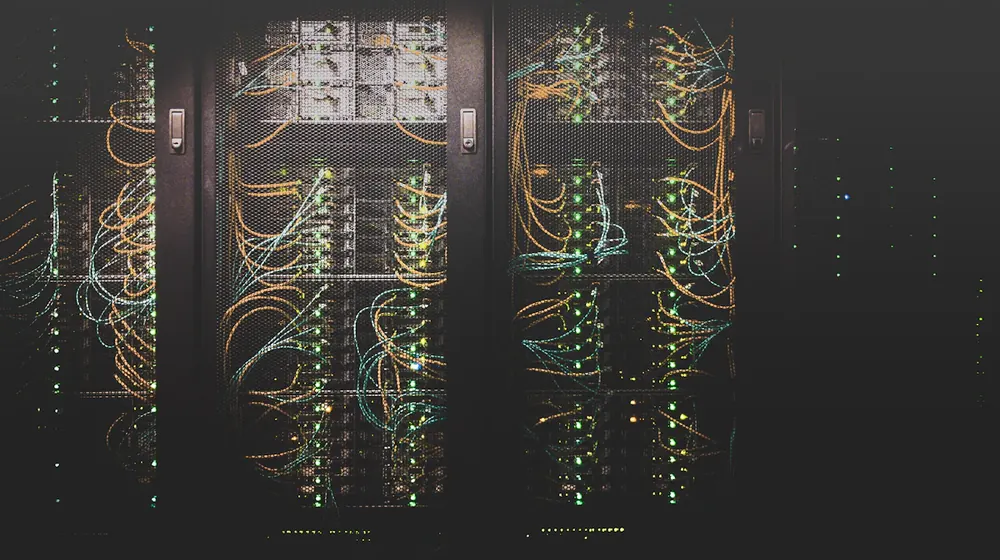
Rows of network cables in a data centre
Photo by Taylor Vick on Unsplash
Unlike the dot-com bubble of the late 1990s, which was built on speculation without revenue, today’s AI leaders are generating real cash from their product.

Investing in AI comes with real structural questions, particularly surrounding high sector concentration and circular revenue loops (where major tech firms invest in component companies and AI startups that turn around and buy their hardware and cloud services).

Balancing these risks is genuine, despite record earnings growth. Unlike the dot-com bubble of the late 1990s, which was built on speculation without revenue, today's AI leaders are generating real cash from their product. However, to maintain current valuations and avoid historical pitfalls, AI companies must continue delivering the long-term profits expected by the market.

Pathfinder's position

We can't avoid technology. We can choose how we hold it.

As active managers, we can adjust the weightings we have to particular sectors or asset classes over time. However, we cannot completely avoid technology (or AI) exposure without significantly differing from the broader market, which carries its own risks given that technology currently makes up a meaningful portion of global share markets.

The strategic asset allocation within our funds is determined by our Investment Team and overseen by our Ethics and Investment Committee. Our approach carefully weighs earnings fundamentals alongside the growth potential of high-demand technologies. While we maintain a deliberate allocation to tech innovators to deliver competitive risk-adjusted returns for our investors, valuation risks are monitored with the help of our global partner. Meaning companies that appear expensive relative to their fundamentals are less likely to be included in our funds, irrespective of whether they are exposed to AI.

AI & the Environment

Energy, the source of that energy, water, land, mining and e-waste. The footprint is extensive.

In this section

  1. Data centres used 1.5% of global electricity in 2025, and that is projected to double by 2030.
  2. Day-to-day use, not model training, accounts for 80% to 90% of energy demand.
  3. We insist the data centres we invest in are sustainable.

The negative environmental impacts of AI are extensive. The major issues are energy use, the source of energy that's created to meet that need, the impact of that on water quality and consumption, toxic mineral mining and electronic waste.13

Energy use

The International Energy Agency estimated that in 2025 data centres (used for AI processing) consumed 1.5% of global electricity. And that's projected to double by 2030, with AI being the major driver of that growth in energy consumption.4

1.5%Share of global electricity consumed by data centres in 2025, projected to double by 2030.Source: International Energy Agency, reference 4

And before you rush to blame energy consumption on training advanced AI models, it's actually day-to-day use that accounts for 80% to 90% of total energy demand according to the UN. That means the collective use of AI tools by citizens globally is driving this resourcing drain.

As well as drawing from power grids used by residents and other businesses causing the price of electricity to increase, there's risk that data centres stimulate additional power generation methods that aren't great for long term environmental health; like coal and oil.

AI-related water consumption could equal the basic annual domestic needs of 1.3 billion people by the end of the decade.UN University

Water and land, quality and consumption

Data centres use huge amounts of water for cooling, taking water away from other, more fundamental uses. This can depend on where in the world a data centre is located, for example cooling is less of a challenge in Iceland compared to hotter countries like Malaysia. But even if less water is required, huge tracts of land still are.

Clear blue water seen from above
Photo by Cristian Palmer on Unsplash

Data centres also require substantial physical space. In some regions, their development has converted undeveloped and agricultural land, with potential impacts including habitat loss, reduced agricultural production and changes to water and soil systems.

Large data centre developments can also compete with other potential land uses, including housing and commercial development (source).

Pathfinder's position

When we invest in data centres, we insist on them being sustainable.

Some of the major environmental impacts of AI happen as a consequence of the infrastructure required to facilitate their computing power (think data centres). Therefore, when investing in data centres we insist on them being sustainable. What this means in practice is assessing their commitment to reducing electricity consumption, increasing renewable energy and improving water efficiency and energy intensity.

Alongside our international portfolio manager Nordea, we work to encourage better corporate standards. For years, Nordea have been engaging with major technology companies and other participants across the AI value chain on both the environmental and social implications of AI growth.

They advocate for best practice, which includes supporting new data-centre growth with additional renewable energy generation.

Their engagement focuses on encouraging companies to improve transparency, support data-centre growth through sustainable energy sources, and minimise environmental impacts. From an environmental perspective, they engage companies on topics such as energy demand, greenhouse gas emissions, renewable energy sourcing, water consumption, and water stress in local communities.

They also seek improved disclosure around the resource implications of AI expansion, clearer target setting, and evidence that environmental risks are being assessed and managed alongside growth ambitions. We can leverage Nordea's engagement reporting to evaluate companies and ensure our holdings align with our investment standards.

AI & Humanity

The biggest ethical question around AI is whether there's a justification for it, considering all the associated harms.

In this section

  1. AI could amplify human capability the way writing, printing and computers did.
  2. Five pressure points: war and peace, reasoning, redistribution, governance, and remaining human.
  3. How Pathfinder invests all things considered.

The promise of AI is improved human wellbeing, knowledge, capability and problem-solving at a civilisation level.

Certainly AI-related advancements in healthcare are impressive with benefits like earlier disease detection, faster diagnosis and increased resources enabling underserved sectors, such as women, to get long-deserved advancements.5

However the scope of AI goes beyond healthcare, with intentions to apply it as an amplifier to a wide range of fields. This has historical parallels, and each of these advancements were suitably feared in their own times.

Many of the concerns we had and the lessons we learned from these advancements could also apply to AI. And if we applied them, we would need to concede that change isn't always detrimental and that adaptation can produce different, but equally good outcomes. However, there's no precedent with the same scale and associated harms as presented by AI.

So, to understand whether the promise of AI is likely to be delivered, we need to explore the challenges against it.

Amplified memoryWritingWould writing make us lose our memory?
Amplified our ability to share knowledgePrintingWould the printing press undermine authorities by allowing independents a voice?
Amplified our ability to do advanced calculationsComputersWould computers make certain jobs redundant?
There’s no precedent with the same scale and associated harms as presented by AI.
Challenge 1 of 5

War & Peace

Technology companies are now inside the weapons supply chain.

We have been concerned about the intersection between technology and weapons for some time, as anyone who read our research on the Special Rapporteur's report to the UN 'From Economy of Occupation to Economy of Genocide' will know. As ethical investors who aim to avoid investing in weapons, you'd think this wouldn't be an issue.

However, the military often lack sufficient expertise to develop and deploy AI technology and that's where outsourcing comes in. Suddenly, technology companies that were making products for entertainment and connectivity start supporting the creation of AI enhanced military applications.6 The ethical concerns of Kanaka Rajan, Associate Professor of Neurobiology at Harvard Medical School, align with Pathfinder's and fall into two main categories:

1An incentive to warWithout literal 'skin in the game' more countries could start wars as there won't be a domestic human cost making them less popular.
2Military objectives overriding civilian researchIf AI related weaponry becomes critical to defence, governments may prioritise resource deployment related to them over health care or scientific research. Or co-opt academics to create dual-use AI, as we've seen in the space industry7 where militaries underwrite a lot of research and development for fledgling companies.

In addition, there are human rights challenges in creating AI/autonomous weapons systems that obey International Humanitarian Rights (IHR) and genuine concerns that these systems won't adhere to them.8 Right to Privacy, Non-discrimination and Right to Remedy are three key examples.

Right to PrivacyOften isn't protected if AI technology requires mass surveillance to develop, test and train.
Non-discriminationHard to protect when AI developers may have inherent biases in their programming. And once deployed, the operator may not know enough about the programming to effectively challenge whether the system is suggesting an action that's discriminatory.
Right to RemedyWhen it comes to the right to seek a remedy for gross violations of IHR there could be serious legal challenges in finding programmers or developers responsible.

Creating ambiguity around who exactly is responsible in the creation of these weapons opens a window for morally avoidant behaviour.

A person holding a bottle with a black and white label
Photo by Markus Spiske on Unsplash
Challenge 2 of 5

Reasoning

Are we making ourselves irrelevant?

The ability of humans to reason has long been considered our unique, and therefore most valuable, faculty. If the tool itself replaces our skills in this area, we won't be capable of taking advantage of the benefits it provides. If we can't think for ourselves, we won't be able to prompt AI to generate solutions to problems or protect ourselves against erroneous arguments or illogical ideas.

Further, this 'benefit' assumes the issue is a lack of intelligent ideas to solve systemic problems. When in fact the real issue is often that smart ideas aren't adopted, especially if they challenge extant power structures.

"The artifact is not the only goal; instead detailed thinking about the problem is the goal."Clay, AI Writing Policy

Risking the ability to reason and think critically is an ironic price to pay for something selling itself as a knowledge and problem-solving enhancer. This makes intentional use of the tool essential to prevent cognitive decline, with the burden almost exclusively on the end user to achieve that.

Challenge 3 of 5

Redistribution (myth?)

Who pays for the jobs AI displaces.

Much theorising on the impact of AI involves the concept of a Universal Basic Income (UBI) to account for the presumed job losses among those displaced from knowledge-based work. The burden of this is assumed to be borne by the tech companies9 whose revenue has increased by selling products trained off the back of the collective information commons at no cost.

It's hard to point to a current example where tech companies voluntarily return sizeable revenue to communities out of democratic responsibility. The closest corollary would be tax and yet we see significant tax avoidance10 rather than generous overpayments.

US$492bnLost to global tax abuse each year, US$347.6 billion of it from multinationals shifting profit offshore to underpay tax.Source: Tax Justice Network 2024, reference 10

Interestingly, many of the governments from countries affected by this voted against the UN tax convention aimed at preventing these companies moving their money to avoid paying tax.

Economist Molly Kinder suggests governments could offset job losses by prioritising replacing them with high-quality humane in-person work such as education, care, community facilitation. But we're yet to see this as a serious political agenda.

Algorithms or probability based models don’t have a moral compass, empathy or relational capability like humans do.
Challenge 4 of 5

Governance

Released fast, tested lightly, regulated little.

AI models are developed and released quickly because of the high demand and potential financial benefits. The risk is that things are released that are inadequately trained or tested which risks harmful or unexpected behaviour. There's also the risk of intentionally unscrupulous and unethical AI uses such as cyber theft and virus design.11 Or the evolving issues of social media where companies like Meta are being taken to court over their use of AI trained algorithms being intentionally addictive and harmful to children.12

Unless governments move to introduce protections for civilians, there's little other than their own conscience motivating large technology companies to act in the best interests of humanity.

Challenge 5 of 5

Remaining Human

Efficiency at any cost has no moral compass.

At a more philosophical level there is a risk that adopting AI (without humane guardrails) risks prioritising efficiency at any cost. Algorithms or probability based models don't have a moral compass, empathy or relational capability like humans do.

Humans don't agree on what the purpose of being human is; but we need to be careful not to create an environment that's counter productive to us exploring this for ourselves.

Pathfinder's position

A blanket exclusion is too blunt an instrument.

With a globally connected world these issues and opportunities are interwoven with the fabric of modern society. A blanket exclusion is too blunt an instrument for such an integrated and fast-moving technology. While we are considering the wider philosophical implications for humanity, in practice we need to assess each company individually based on their alignment with our Ethical Investment Policy (EIP).

Our EIP details our position on weapons and any technology company making revenue over 5% from sales to the military would be in breach and it includes a clause that allows us to divest for reasons of Inconsistent Behaviours (which we've used in the case of Amazon, read about that here).

Our international investment partner, Nordea, actively engages with major AI leaders, including Microsoft and Alphabet, to promote responsible AI frameworks and policies aligned with our ethical values as per our EIP.

Pathfinder has proactively requested that our ESG data providers introduce dedicated AI governance metrics.

Pathfinder continuously monitors the governance of our holdings by integrating third-party ESG data with our own qualitative research. Under our EIP and investment processes frameworks, we evaluate and monitor companies' human rights performance both prior to and throughout our investment, seeking to identify businesses that lack sustainable policies or robust governance structures. If such businesses are identified, the investment team will review thoroughly.

Furthermore, to address what we perceive as current industry reporting gaps, Pathfinder has proactively requested that our ESG data providers introduce dedicated AI governance metrics. Our primary objective is establishing clear verification of whether portfolio companies have established or are actively developing responsible AI frameworks and operational safeguard mechanisms. As vendor coverage expands, we intend to integrate these specific policy and safeguard metrics into our screening process.

Big Picture Summary

The TLDR for AI is "it's complicated". But we think that's a cop out.

In this section

  1. How AI is deployed matters as much as what it is used for.
  2. The question for ethical investors is a cost/benefit one: the potential benefit to civilisation against the resources and human dignity spent.
  3. Just because you can, doesn't mean you should.

When something is as complicated as AI it means there's an opportunity for comprehension; so here's our take.

AI can enhance and amplify both existing products and services with valuable benefits for civilisation. But just like any technology, it's how you use it that matters as much as what you use it for. AI can both more efficiently save lives and more efficiently destroy them.

How the technology is deployed should be the biggest area of consideration for ethical investors, then contrasted by the resources required to achieve it. In other words, what's the cost/benefit analysis?

Just because you can, doesn’t mean you should.

We want to see more critical thinking applied to AI use cases, including the impact on the dignity, purpose and value of humans for the sake of efficiency, and better protections for the natural capital being used to fuel these developments.

Illustration of raised hands holding hearts

Summary of our AI practices

No specific AI exclusion, but every existing exclusion still applies. Here is how that works.

In this section

  1. We haven't created a specific AI exclusion. A total exclusion would remove a vast portion of the investment universe and create severe concentration risk.
  2. If an AI company's products are used in an excluded activity, such as weapons or animal testing, the relevant exclusion applies.
  3. Exceptions are rare and need Ethics and Investment Committee approval on transition, transformation or financial grounds.

We haven't created a specific exclusion for AI, because we haven't determined that AI is fundamentally inconsistent with our principles.

Like many technological enhancements, we're concerned with how the technology is deployed, the impact it has on things we care about (people, planet, animals) and potential harm from its supply chain. In addition a total exclusion on any company developing or utilising AI tools would eliminate a vast portion of the global investment universe. This would create severe concentration risk within our portfolios and could risk violating our duty to manage members' finances prudently.

That said, if an AI company's products are used in an activity that we have excluded, for example, weapons or animal testing, they would be subject to the relevant exclusion.

For instance, if an AI company made more than 50% of their revenue from defence contracts where their software was being used for surveillance that would breach our policy for non-weapons related military sales.

In exceptional circumstances, we may invest in companies which do not fully comply with our ethical exclusions. These decisions are taken very seriously and require approval from our Ethics and Investment Committee based on a review of the circumstances and factors affecting the investment decision, including:

  • Transition (the company is in the process of stopping an activity that breaches).
  • Transformation (the activity that breaches will result in overall improvements).
  • Financial (without the company we would risk not being able to create a portfolio with appropriate diversification and/or risk return characteristics). Read more about our Exceptions here.
It sells itself as doing things better but that’s not enough for us, we’re also looking for companies doing better things.

When we assess a company, we are thinking holistically, looking at how it aligns with our EIP and part of that is whether it respects people, our planet and animals. At Pathfinder we aren't about short-term extraction, we're about long term sustainability and this applies to AI.

Cover of the Pathfinder Ethical Investment Policy
Read our Ethical Investment Policy (PDF)
Disclosure: This article was written by Pathfinder's Chief Marketing and Client Officer with support from Pathfinder's Senior ESG Analyst. Microsoft Copilot was asked the following prompt "In what ways does AI benefit humanity? Another way to ask could be: what is the case for continued support and expansion of AI beyond financial that is a significant enough counterbalance to the widespread harms?" The content provided was considered by the authors.